
Have you ever made a small mistake at work and instantly assumed your career was over or convinced yourself that a friend’s delayed text meant they were furious with you?
If so, you have experienced a cognitive distortion—an exaggerated, irrational thought pattern that warps how you perceive reality. These mental shortcuts act like a funhouse mirror, bending everyday facts into distorted threats.
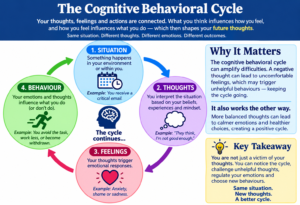
First identified by psychiatrist Aaron Beck in the 1960s, cognitive distortions are extremely common. They include catastrophizing (expecting the worst-case scenario), all-or-nothing thinking (viewing life in black-and-white extremes), and mind reading (assuming you know others’ negative thoughts). While these habits initially evolved to keep us safe from real threats, repeating them continually breeds chronic stress, anxiety, and self-doubt.
The good news is that you can retrain your brain using simple Cognitive Behavioural Therapy (CBT) techniques:

By calling out these mental tricks, you regain control over your mind set—turning distorted fear into objective clarity.