
Headline: Your Brain’s Mental Workspace: How Working Memory Shapes Everyday Success
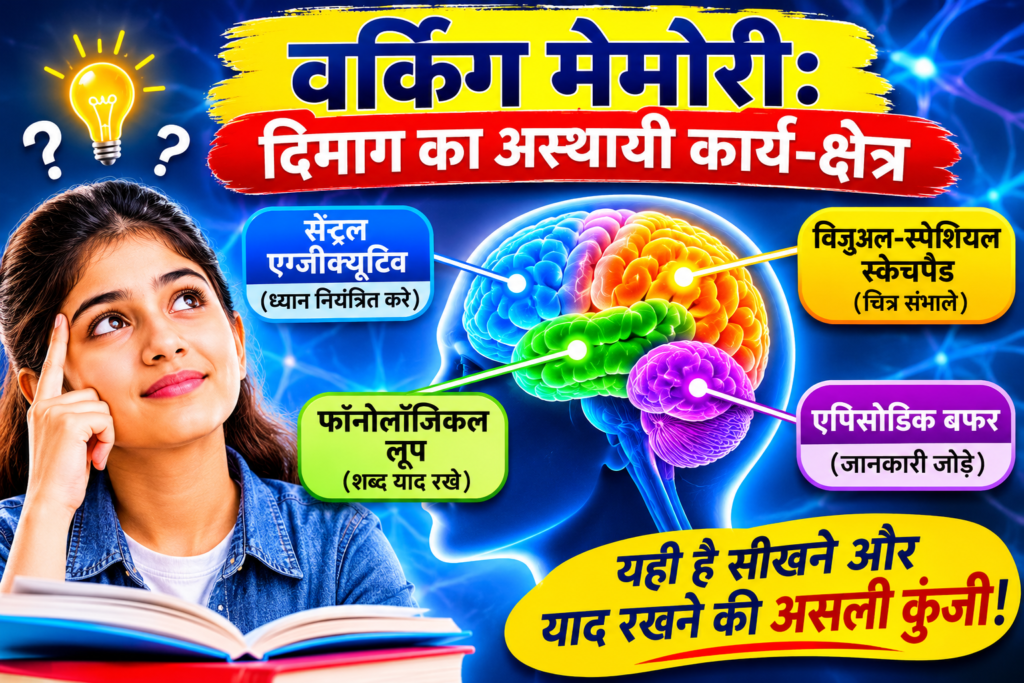
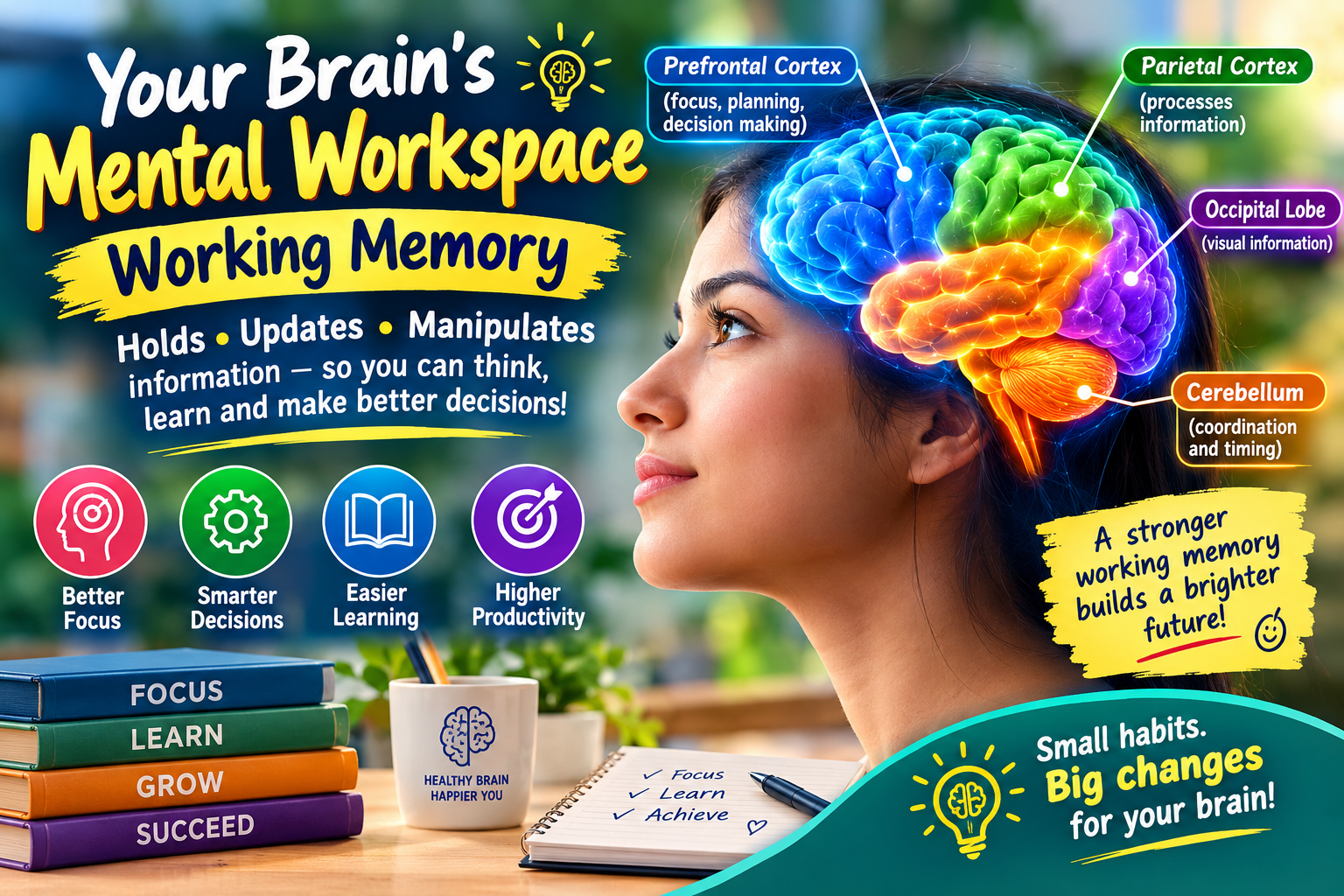
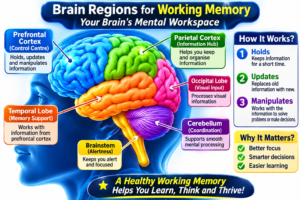
Working memory is the brain’s ability to temporarily hold, update and manipulate information while performing tasks. It acts like a mental workspace, helping us follow conversations, solve problems, make decisions and learn new things.
From remembering a phone number while dialing to following instructions or calculating expenses, working memory plays a vital role in our daily lives.
Unlike long-term memory, working memory has limited capacity. Stress, poor sleep, distractions and mental overload can reduce its efficiency. When overwhelmed, we may forget instructions, lose focus or struggle to make decisions.
The good news is that practical habits can support working memory and improve mental performance.
Practical Action Guidance:
Focus on one task at a time: Reduce multitasking and distractions.
Practise mental exercises: Solve puzzles, recall information or perform simple mental calculations.
Use chunking: Break complex information into smaller, meaningful groups.
Write things down: Use lists and notes to reduce mental overload.
Get adequate sleep: Sleep supports attention, learning and memory.
Stay physically active: Regular exercise supports brain health.
Practise mindfulness: Train your attention to return to the present moment.
A sharper working memory means better focus, smarter decisions and more effective learning—one mindful habit at a time.